English
  Français
  Español
  Português
  Deutsch
  العربية
  Italiano
  Nederlands
  Русский
  日本語
日本語 Misunderstood “Environmental Star”
At a time when environmental awareness is increasingly awakening, degradable tableware seems to be labeled as “environmental savior” and has become the “magic weapon” for solving white pollution in the minds of many consumers. But in fact, there may be many deviations in our understanding of degradable tableware.
Many people think that as long as the tableware is marked “degradable”, it means that they can completely disappear from our environment in a short period, such as a few months or even a few weeks. But is this the case? The degradable tableware commonly seen on the market may claim a degradation time of 3-6 months in an ideal laboratory environment. However, once it enters the complex and changeable natural environment, the situation is very different. Under natural conditions, degradation is restricted by many factors such as temperature, humidity, type and number of microorganisms, and the degradation time may be extended to one year or even longer. For example, if some plastic tableware marked “degradable” is buried in dry soil, it may be found that they are only slightly damaged on the surface after one year, which is far from the expected “complete degradation”.
Some people also believe that as long as it is degradable tableware, it can degrade smoothly in any environment. However, different types of degradable tableware have strict requirements for their degradation conditions. For example, biodegradable plastic tableware can only be degraded in about 6 months under industrial composting conditions with specific microorganisms, suitable temperature (usually 50-60 degrees Celsius), certain humidity, and sufficient oxygen. But in ordinary soil and marine environments, the degradation rate will become extremely slow. A research institute once put biodegradable plastic tableware into the ocean for testing. After 400 days, the mass loss was only about 0.5%, which is almost negligible.
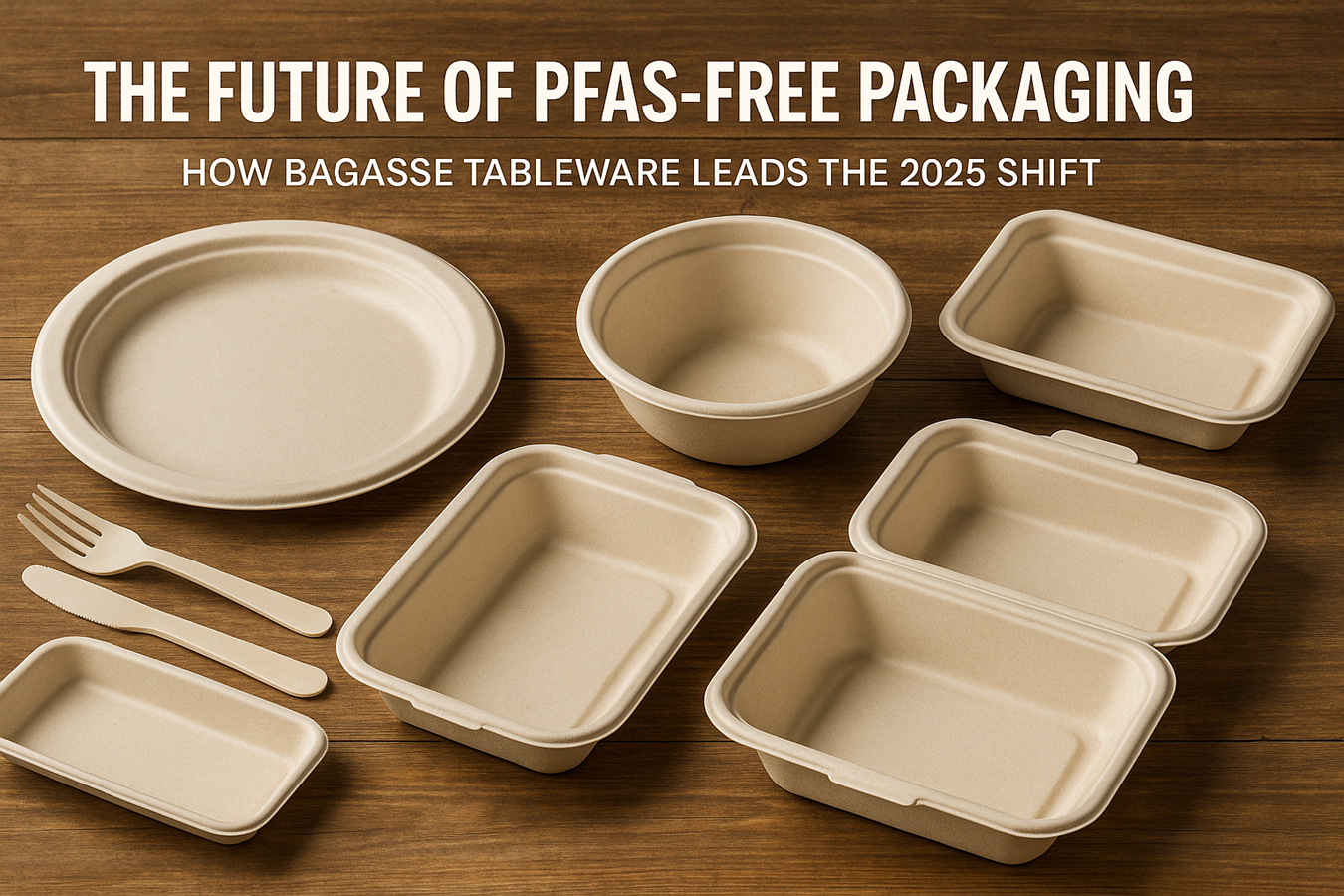
The wonderful world of raw materials
The reason why degradable tableware can achieve the magical effect of “degradation” is inseparable from the support of various special raw materials. At present, the common degradable tableware raw materials on the market are rich and diverse, and each has its advantages.
- Corn starch is one of the star raw materials. It comes from corn, a widely planted crop. The large amount of corn harvested every year provides a continuous source for it and has excellent renewability. Tableware made of corn starch can be decomposed by microorganisms quickly under the right environment. For example, in warm, humid soil rich in microorganisms, corn starch tableware may begin to show obvious signs of degradation in a few months to half a year, and eventually decompose into carbon dioxide and water, returning to the natural cycle. In terms of performance, corn starch tableware has moderate strength, which can meet the basic needs of daily food storage. It also has a certain degree of oil resistance, which can effectively prevent oil penetration. However, it also has some shortcomings. It is easy to get damp and soften in a high-humidity environment, and the storage conditions are relatively harsh; due to factors such as production technology and raw material costs, the price is relatively high.
- Bamboo fiber is also a popular degradable tableware raw material. Bamboo grows very fast and can mature in 3-5 years. It is an inexhaustible renewable resource. Bamboo fiber tableware naturally has antibacterial and antifungal properties, which come from the natural antibacterial substance “Zhukun” contained in bamboo. It has high strength, a hard texture, is not easy to deform, can withstand a certain weight of food, and is suitable for holding all kinds of hot food. In terms of environmental protection, bamboo fiber tableware can be completely degraded in the natural environment without leaving any harmful residue. However, the processing technology of bamboo fiber tableware is relatively complicated. It needs to go through multiple processes to process bamboo into fiber and make tableware, which makes its production cost high and its price in the market lacks competitiveness.
- There is also polylactic acid (PLA), which is made from starch-containing biomass such as corn and cassava, and is made through a series of high-tech means such as microbial fermentation. PLA has excellent biocompatibility, is non-toxic and harmless to the human body, and is widely used in the field of food packaging. Under specific composting conditions, PLA can be quickly degraded within a few months and converted into harmless substances. It has a smooth and bright appearance and good texture. It is often used to make tableware in high-end restaurants to enhance the product image. However, polylactic acid has extremely strict requirements on storage conditions. It is easy to soften and deform at too high a temperature, and it will become brittle and fragile at too low a temperature, which limits its scope and scenarios of use.

The scientific principle behind degradation
The reason why degradable tableware can “disappear” in the natural environment is that there is a set of complex and exquisite scientific principles behind it. When degradable tableware is discarded in a suitable environment, microorganisms, like diligent “cleaners”, begin to play a key role.
Take biodegradable plastic tableware as an example. Its degradation process is roughly as follows: microorganisms will secrete special hydrolases outside the body. These enzymes are like tiny “scissors” that tightly bind to the surface of the tableware and accurately cut off the polymer chains. After the polymer chains are cut, the original huge molecular structure is disassembled into small molecular weight compounds. These small molecular compounds are like decomposed “food fragments” and are then ingested by microorganisms. In the microorganisms, these compounds will undergo layers of metabolic processes, just like being processed in a micro-factory, and will eventually be synthesized into the microorganism’s substances, or converted into energy required for microbial activities, while the remaining part will be converted into carbon dioxide and water, returning to the material cycle of nature.
However, the degradation rate of degradable tableware is not constant. It is affected by many factors. Temperature is one of the key factors. Generally speaking, within a certain range, rising temperature can accelerate the activity of microorganisms and thus accelerate degradation. For example, in the hot summer, the temperature is high, and the degradation rate of degradable tableware in the outdoor environment will be much faster than that in the cold winter. Humidity also plays an important role. Moderate humidity provides a good environment for the growth and reproduction of microorganisms, just like creating a comfortable “home” for microorganisms, which is conducive to degradation. However, if the humidity is too high, such as in places where water accumulates for a long time, it may lead to insufficient oxygen supply, affect the activity of aerobic microorganisms, and slow down the degradation rate; while the humidity is too low and the overly dry environment is not conducive to the survival of microorganisms, which will also hinder degradation.
In addition, different types of degradable tableware have different degradation rates due to differences in their raw materials and chemical structures. Like the corn starch tableware mentioned above, because the starch itself is more easily decomposed and utilized by microorganisms, it degrades relatively quickly in a suitable environment; while some synthetic degradable plastic tableware has a relatively complex chemical structure and is more difficult to degrade, so the degradation rate will be slower.

The current situation and chaos of the market
Driven by the wave of environmental protection, the degradable tableware market has ushered in unprecedented development opportunities and is showing a booming growth trend. According to relevant data, the global biodegradable disposable tableware market will reach $12.2 billion in 2024, and it is expected that by 2034, this figure will soar to $18.6 billion, with a very broad prospect. In China, the biodegradable disposable tableware industry is also developing rapidly. In 2020, its output value was 2.52 billion yuan, and it is expected to jump to 5.14 billion yuan by 2025, with a growth rate of 104.3%, which is remarkable.
However, behind the rapid development, the degradable tableware market also hides much chaos. False propaganda is common. To maximize profits, some unscrupulous merchants disguise ordinary plastic tableware as degradable tableware and label the product packaging with words such as “degradable” and “environmentally friendly” to mislead consumers. Some media have revealed that some disposable lunch boxes marked as “corn starch-based environmentally friendly materials” are found to be made of polypropylene, which cannot be biodegraded at all. This is undoubtedly a serious violation of consumer trust.
Faced with this market chaos, consumers must be vigilant and master some identification skills when purchasing degradable tableware. Choose regular channels to buy, such as supermarkets and regular e-commerce platforms. These channels have relatively stricter control over product quality and can reduce the risk of purchasing counterfeit and shoddy products to a certain extent. Carefully check whether the product labels and logos are complete, including information such as the manufacturer, implementation standards, and ingredient descriptions. If the product label is unclear and the information is missing, there is a high probability of quality problems. You can also make a preliminary judgment by the method of “one look, two smells, three tears”: see if the surface of the lunch box is smooth, whether there are impurities or black spots, and be cautious when choosing lunch boxes with too bright colors; smell whether the lunch box has a pungent odor, and qualified degradable lunch boxes should have no obvious odor; gently tear the lunch box, if it has poor strength and can be easily broken, it is likely to be a low-quality product using recycled waste or adding a large amount of industrial-grade calcium carbonate and talcum powder.

Infinite possibilities in the future
Looking to the future, the field of degradable tableware is full of unlimited innovation vitality and development potential, and it presents an exciting trend in both technological innovation and market prospects.
In the journey of technological innovation, the development of more efficient degradable materials is a key breakthrough direction. Scientists are going all out to explore various new materials and innovative technologies in depth, hoping to find ideal materials with faster degradation, better performance, and a wider application range. A research team is committed to developing new biodegradable materials based on microbial fermentation, which is expected to achieve faster and more thorough degradation in the natural environment, while also having good mechanical properties and stability to meet the needs of use in different scenarios. Improving production processes is also an important way to enhance the competitiveness of degradable tableware. By introducing advanced production equipment and intelligent production technology, production efficiency can be improved, production costs can be reduced, and degradable tableware can be made more competitive in terms of price. Using 3D printing technology to produce degradable tableware can not only achieve personalized customization and meet the diverse needs of consumers, but also reduce material waste in the production process and further improve resource utilization efficiency.
With the concept of environmental protection deeply rooted in the hearts of the people and the global trend of actively responding to plastic pollution, the market prospects of degradable tableware are bright. With the continuous enhancement of consumers’ environmental awareness, the demand for green and sustainable products will become more and more vigorous. As a representative of environmentally friendly tableware, degradable tableware will surely usher in greater market demand. It is expected that in the next few years, the market size of degradable tableware will continue to maintain a high-speed growth trend, and its application in catering, tourism, takeaway, and other industries will be more extensive. In the catering industry, more and more restaurants and hotels will choose to use degradable tableware to demonstrate their environmental protection concepts and social responsibilities; in the field of takeaway, degradable tableware will gradually become the mainstream, providing an effective solution to the problem of takeaway garbage pollution. Degradable tableware will also continue to expand new application areas, such as airline catering, school canteens, medical institutions, etc., to contribute to the green development of these industries.
As an important way to solve the problem of plastic pollution, degradable tableware faces some challenges in the development process, but it also contains huge development opportunities. We should objectively and comprehensively understand degradable tableware. While enjoying the environmental convenience it brings, we should pay attention to the development trends of the industry and jointly promote the degradable tableware industry in a healthier and more sustainable direction. Let us work together to light up the green future with degradable tableware and contribute our strength to a better tomorrow for our home planet.