









Quick Summary: 2026 Global Compostable Packaging Regulations
There is no single global compliance route for compostable packaging. In 2026, buyers must separate four questions that are often incorrectly combined: Is the product legally permitted? Is the compostability claim supported? Who has EPR or reporting obligations? What labeling and disposal instructions are required in the destination market?
- Europe: Regulation (EU) 2025/40 (PPWR) has applied since 12 August 2026. EN 13432 remains an important industrial-compostability reference, but it is not automatic proof of full PPWR conformity and does not override Single-Use Plastics Directive restrictions.
- United States: ASTM D6400-26 is the current active ASTM edition for eligible compostable plastics and products made from plastics. BPI is a certification organization, not the ASTM standard itself. State EPR and compostable-labeling rules vary significantly.
- Canada: federal plastics reporting and provincial EPR programs are separate systems. The Federal Plastics Registry does not replace provincial producer-responsibility obligations.
- Australia and New Zealand: AS 4736-2006 incorporating Amendment 1-2009 is used for commercial compostability verification and AS 5810-2010 for home compostability under the Australasian Bioplastics Association framework.
- Singapore: Mandatory Packaging Reporting already applies to qualifying companies, while the Beverage Container Return Scheme started on 1 April 2026 as a specific EPR system for regulated beverage containers.
- Global rule: compostability certification, EPR registration, environmental claims, food-contact compliance, chemical restrictions and local composting acceptance must be checked separately.
Current Status — September 2026
This guide is now a current-market compliance reference, not a forecast about what may happen in 2026. Regulatory obligations have entered different implementation stages in different jurisdictions. Buyers should therefore verify the exact product, legal role, reporting year, certification scope and destination market before approving packaging or artwork.
For foodservice brands, importers, distributors and private-label buyers, “compostable packaging compliance” is no longer one certificate or one logo. A product can have valid compostability evidence and still fail another requirement because the wrong operator registered for EPR, the item falls under a product restriction, the food-contact file does not match the intended use, or the disposal claim is not appropriate for local infrastructure.
Bioleader® recommends using a market-first sourcing sequence:
Destination market → product classification → material structure → product legality → compostability route → certification scope → food-contact and chemical evidence → EPR/reporting role → labeling → local collection and processing.
Buyers can review available Bioleader® documentation through the Certificates & Test Reports resource and then request the files applicable to the selected SKU, material structure and destination market.
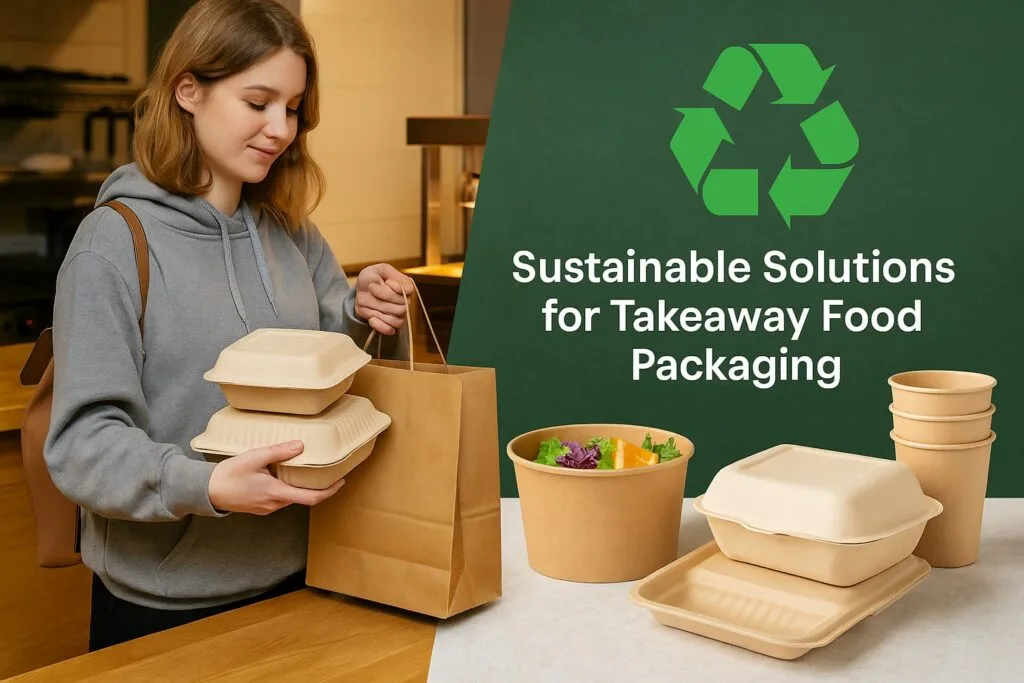
What Changed in 2026—and What Buyers Must Do Now
The important 2026 change is not that every country adopted the same compostable-packaging law. The important change is that several major markets moved from broad sustainability targets into more concrete implementation, reporting, claim-control or producer-responsibility stages.
| 2026 Development | What Changed | Buyer Implication |
|---|---|---|
| EU PPWR | Regulation (EU) 2025/40 has applied since 12 August 2026, although individual requirements still follow their own application dates and transitional rules. | Stop treating PPWR as a future project. Classify current packaging, identify applicable obligations and build product-specific evidence files. |
| EU environmental claims | Member State measures transposing Directive (EU) 2024/825 apply from 27 September 2026, strengthening controls around generic environmental claims and sustainability labels. | Review wording such as “eco-friendly,” “green,” “biodegradable,” “compostable” and related certification marks against the actual evidence and scope. |
| ASTM D6400 | ASTM D6400-26 is the current active edition. The 2026 revisions strengthen constituent biodegradability requirements relevant to compostable-product assessment. | Check whether current certification or test evidence is aligned with the applicable certification scheme and current standard edition. |
| U.S. packaging EPR | Implementation is increasingly state-specific. California’s SB 54 permanent regulations became effective in May 2026; Oregon producer obligations are already active; Washington producers entered early EPR registration and reporting stages in 2026. | Do not use one “U.S. EPR compliant” statement. Determine the producer role and current obligation state by state. |
| Canada plastics reporting | Federal Plastics Registry Phase 1 reporting continues for the 2024–2026 calendar years, while Phases 2 and 3 have been postponed. Provincial EPR remains separate. | Distinguish federal reporting from provincial producer-responsibility obligations. |
| Singapore packaging policy | Mandatory Packaging Reporting continues for qualifying companies, and the Beverage Container Return Scheme commenced on 1 April 2026. | Do not describe Singapore as having one universal compostable-packaging EPR rule. Identify the specific reporting or beverage-container obligation that applies. |
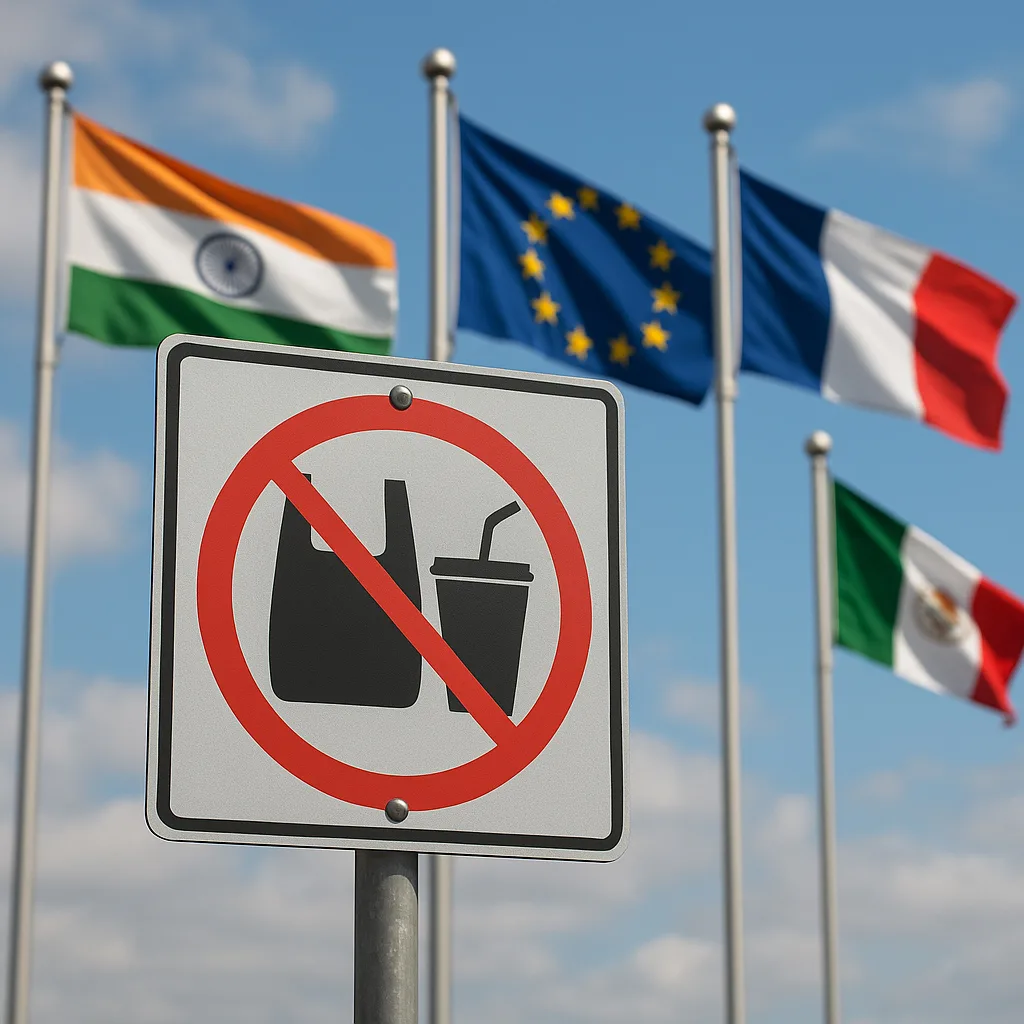
2026 buyer rule: “Certified compostable” is a product claim. “EPR registered” is an economic-operator obligation. “Legally permitted” is a market-access question. “Accepted by a composter” is an infrastructure question. Treat all four separately.
Global Buyer Map: Which Framework Applies Where?
No comparison table can replace a country-specific legal review, but a market map helps buyers decide which question to investigate first.
| Market | Primary Compostability Reference | Producer / EPR Issue | Key Buyer Question |
|---|---|---|---|
| European Union | EN 13432 remains an important industrial-compostability reference; PPWR introduces its own evolving harmonised-standard framework. | PPWR and national producer-responsibility systems; obligations depend on the operator role and Member State implementation. | Is the item legally packaging, is compostability relevant to this format, and what PPWR / SUP / national obligations apply? |
| United States | ASTM D6400-26 for eligible compostable plastics; other ASTM routes can apply to different structures. BPI is a major third-party certification program. | State-level packaging EPR and state compostable-product labeling rules. | Which state is the product sold into, and does that state require specific certification, labeling, registration or PRO participation? |
| Canada | Market and program requirements vary; ASTM-based evidence and other recognized evidence may be relevant depending on the product and buyer. | Federal Plastics Registry plus separate provincial EPR frameworks. | Who must report federally, who is the provincial producer, and what local claim or disposal rules apply? |
| Australia / New Zealand | AS 4736 for commercial compostability and AS 5810 for home compostability under the ABA verification framework. | Packaging stewardship and local waste rules should be reviewed separately from compostability certification. | Is the claim commercial compostable or home compostable, and does the finished product hold the appropriate verification or sublicense? |
| Singapore | No single compostable-packaging certification rule should be assumed for all packaging. | Mandatory Packaging Reporting for qualifying companies; beverage-container EPR for regulated beverage containers. | Is the company subject to MPR, and is the product within the beverage return scheme or another packaging requirement? |
| GCC markets | Requirements vary by country, product, material and local conformity framework. | Country-specific import, packaging, labeling and waste-management obligations. | Which GCC country and product format are involved? Do not apply one regional “GCC compostable certificate” rule. |
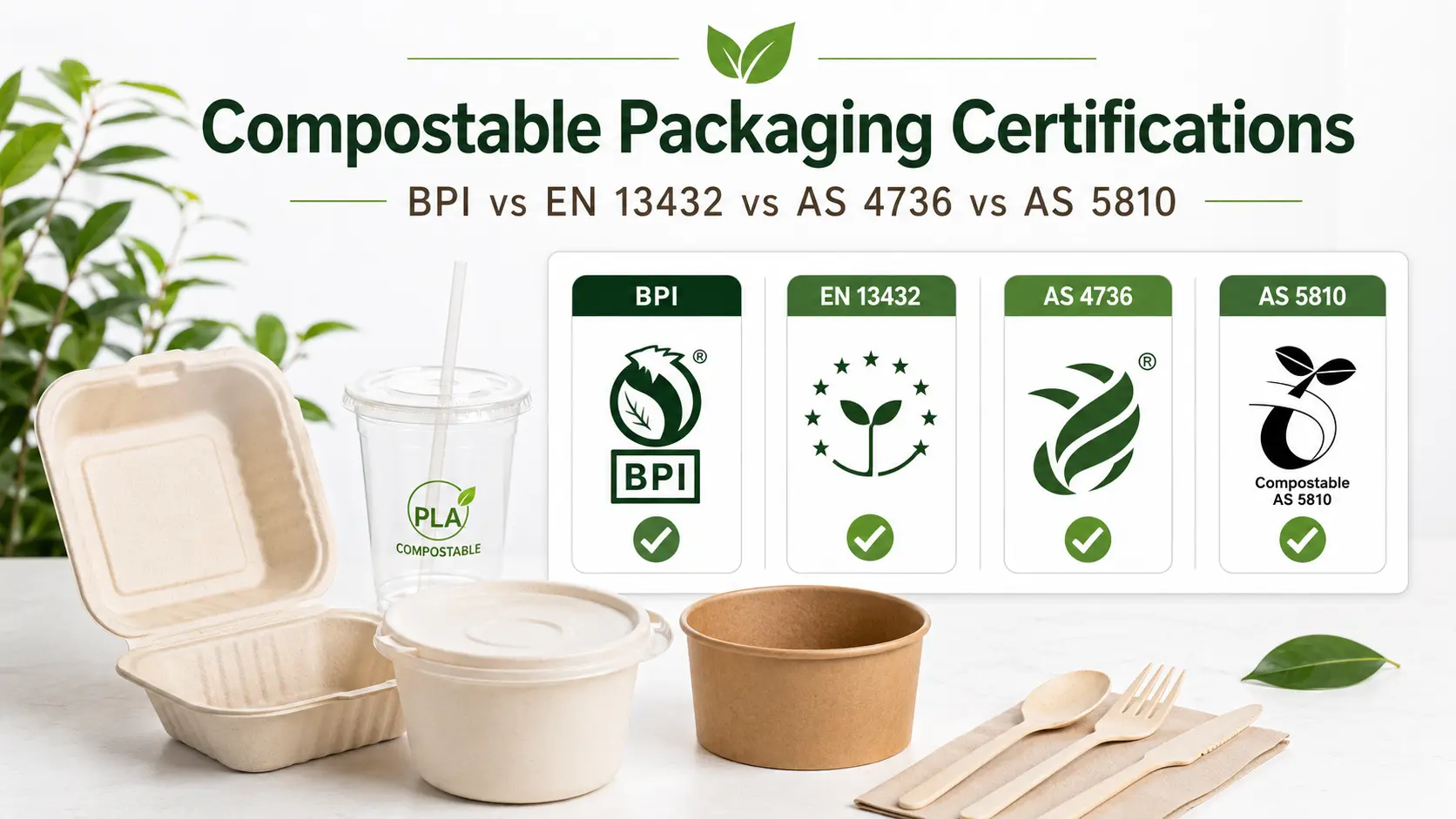
For a deeper certification comparison, use Bioleader®’s BPI vs EN 13432 vs AS 4736 vs AS 5810 buyer guide.
EN 13432 in Europe: Important Evidence, Not a Universal EU Passport
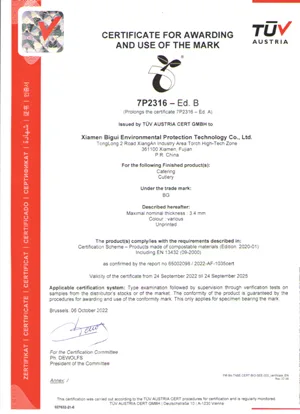
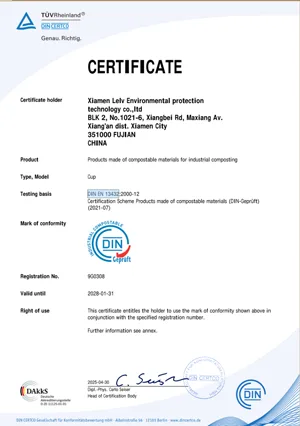
EN 13432 is a European standard for packaging recoverable through composting and biodegradation. It supports industrial-compostability assessment, but it should not be described as the foundation of every EU packaging requirement or as automatic permission to sell every compostable product format in Europe.
Under the European Commission’s 2026 PPWR guidance, the existing EN 13432 standard can continue to be used as guidance for industrial compostability while updated harmonised standards are developed. Buyers should therefore distinguish:
- EN 13432-related industrial-compostability evidence;
- PPWR conformity;
- Single-Use Plastics Directive product restrictions;
- food-contact compliance;
- PFAS and other chemical restrictions;
- national EPR, labeling and waste obligations.
 |  |
What EN 13432 Does Not Override
Bio-based or biodegradable plastic can still be treated as plastic under EU single-use-plastic rules. This matters particularly for plastic cutlery, plates, straws and other regulated product formats. An EN 13432 certificate does not create an exemption from an applicable market restriction.
Likewise, a bagasse container, paper bowl, PLA cup or coated fibre package must be evaluated as the actual finished construction. The presence of a compostable base material does not automatically determine the legal status of lids, coatings, inks, labels or other components.
 |  |
For the full EU product analysis, read Understanding EN 13432 Certification: Can Bagasse and PLA Tableware Be Exported to Europe?.
For implementation, Bioleader®’s PPWR 2026 foodservice packaging checklist explains how buyers should review complete material structures, PFAS evidence, food-contact files, labels and supplier documents. The PPWR Declaration of Conformity guide covers Article 15, Article 38, Annex VII technical documentation and Article 39 / Annex VIII declaration requirements.
Italy note: National compostability requirements can differ where EU law permits Member State measures. Buyers sourcing for Italy should review the current Italy 2026 compostable packaging rule rather than applying a generic EU-wide statement.
ASTM D6400-26 and BPI in the United States
ASTM D6400-26 is the current active ASTM edition for plastics and products made from plastics designed for aerobic composting in municipal or industrial facilities. The standard itself is not a certification organization.
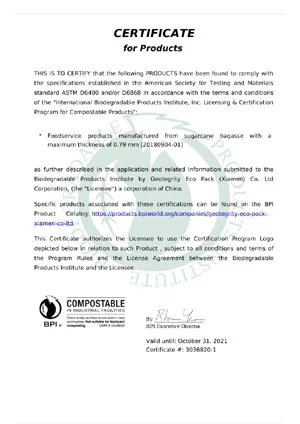
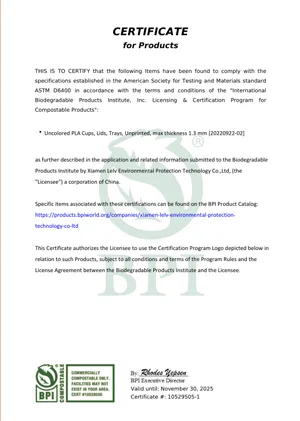
BPI is a third-party certification organization and certification scheme. Its commercial compostability program uses ASTM D6400 as a base standard and may use other ASTM routes for eligible product constructions.
Do not write “ASTM D6400/BPI” as if they were the same credential. A laboratory report referencing ASTM D6400 is not automatically the same thing as a finished product being BPI Certified.
 |  |
Why U.S. Buyers Must Check the State, Not Just the Standard
The United States does not have one packaging-EPR rule or one compostable-labeling rule that works identically in every state.
| State Example | 2026 Status | Buyer Implication |
|---|---|---|
| California | SB 54 packaging and single-use plastic food-service ware EPR regulations became effective in May 2026. | Determine whether the product and responsible producer fall within the covered-material and producer-responsibility framework. |
| Oregon | Covered producers have had registration, reporting and PRO fee obligations from 2025 onward under the Recycling Modernization Act. | Confirm the producer and PRO obligations for packaging, paper and covered food serviceware. |
| Washington | Compostable-product labeling rules already apply; the Recycling Reform Act entered EPR registration and implementation work in 2026, with broader system rollout continuing toward 2030. | Check compostability labeling and producer declaration requirements separately from packaging-EPR obligations. |
Washington is a useful example of why “certified compostable” and “EPR compliant” cannot be combined into one claim. Its compostable-product law requires specified products to follow certification and labeling rules, while its packaging EPR program has a different producer-registration and funding structure.
For the technical comparison, see EN 13432 vs ASTM D6400: Quick FAQ Guide for Export Buyers.
Canada: Federal Plastics Reporting Is Not the Same as Provincial EPR
Canada should not be described as operating one unified federal packaging-EPR program.
The Federal Plastics Registry collects plastics data across the value chain. As of September 2026, reporting for Phases 2 and 3 has been postponed, while organizations subject to Phase 1 must continue reporting applicable data for the 2024, 2025 and 2026 calendar years.
At the same time, provinces operate their own producer-responsibility programs. The federal registry does not replace those provincial EPR obligations.
| Canada Compliance Layer | What It Does | Buyer / Brand Check |
|---|---|---|
| Federal Plastics Registry | Federal reporting system for specified plastics data. | Determine whether the organization, product category and reporting year are in scope. |
| Provincial EPR | Producer-responsibility obligations vary by province and program. | Identify the legally responsible producer and applicable PRO/reporting obligations in each province. |
| Compostability claim | Product-level environmental claim requiring suitable evidence. | Verify standard, certificate scope, disposal statement and local acceptance rather than assuming EPR registration validates the claim. |
Canada buyer rule: Do not treat federal reporting, provincial EPR, compostability certification, bilingual consumer communication and local organics acceptance as one compliance package. They are separate questions.
Australia and New Zealand: AS 4736 vs AS 5810
Australia provides a useful example of why buyers must distinguish commercial compostability from home compostability.
- AS 4736-2006 incorporating Amendment 1-2009: commercial compostability verification for eligible biodegradable plastic products under the Australasian Bioplastics Association framework.
- AS 5810-2010: home-compostability verification for eligible products under lower-temperature home-composting conditions.
The Australasian Bioplastics Association states that conformance with one standard should not automatically be assumed to establish conformance with the other. Certification also does not guarantee that every composting system or local council will accept every certified product.
For buyers comparing these Australian standards with BPI and EN 13432, see the global compostability certification comparison.
Singapore and Asia-Pacific: Avoid One-Size-Fits-All Claims
Asia-Pacific should not be summarized as one “ISO certification + EPR” market. Packaging rules, reporting thresholds, material restrictions and waste infrastructure differ widely by country.
Singapore: Two Different Packaging Policy Layers
Singapore’s Mandatory Packaging Reporting requires qualifying producers of packaged products and specified retailers to report packaging data and submit 3R plans. For the 2026 reporting cycle, qualifying companies reported calendar-year 2025 packaging data.
Separately, Singapore’s Beverage Container Return Scheme started on 1 April 2026. It is an EPR system for regulated plastic and metal beverage containers, not a universal EPR program for all compostable food packaging. The transition period runs through September 2026, with full implementation from 1 October 2026.
GCC Markets: Country-Specific Review Is Essential
Saudi Arabia, the UAE, Qatar, Kuwait, Oman and Bahrain should not be treated as one identical compostability-certification market. Product bans, conformity requirements, labeling rules and acceptable materials differ by country and product type.
For buyers operating in Gulf markets, Bioleader® maintains a dedicated GCC biodegradable food packaging supplier guide. Market-specific rules should still be rechecked before artwork, certification or shipment decisions.
EPR: Extended Producer Responsibility Is Not a Compostability Certificate
EPR generally shifts defined end-of-life responsibilities for packaging or other covered products toward producers. Depending on the jurisdiction, this can include registration, reporting, membership in a Producer Responsibility Organization, fees, data submission or other obligations.
However, EPR does not answer whether a package is industrially compostable, home compostable, food-contact safe or accepted by a local composter.
| Compliance Question | Typical Evidence / Action | What It Does Not Prove |
|---|---|---|
| Is the product compostable? | Applicable standard, certification scheme, certificate scope and finished-product evidence. | EPR registration or producer fees. |
| Who pays / reports for packaging? | Producer-role analysis, EPR registration, PRO membership, reporting and fee records as applicable. | Compostability or recyclability of the individual SKU. |
| Can the environmental claim be printed? | Claim substantiation, certification-mark authorization and local consumer-protection rules. | Automatic acceptance by waste infrastructure. |
| Can the product contact food? | Product-specific food-contact evidence for the intended food, temperature and contact time. | Compostability or EPR compliance. |
| Will the package be collected locally? | Municipal, hauler or compost-facility acceptance rules. | Certification alone. |
Do Compostable Packages Still Have EPR Obligations?
Often yes, if the product falls within the relevant jurisdiction’s definition of covered packaging and the company is the legally responsible producer. Compostability does not automatically remove a package from producer-responsibility systems.
For EU-facing buyers, this is why the question “Is it EN 13432 certified?” should never replace “Who is the producer, what packaging is placed on the market, and what national registration or reporting obligations apply?”
Certification, Labeling and Environmental Claims Must Also Be Separated
A certification logo is not simply a decorative “green” symbol. Certification schemes control who may use the mark and on which certified product.
Similarly, generic sustainability language creates separate consumer-protection risk. In Europe, rules applying from 27 September 2026 strengthen control of generic environmental claims and sustainability labels. In the United States, FTC Green Guides require marketers to substantiate compostability claims and qualify claims when appropriate, including where municipal or institutional composting facilities are not widely available.
Artwork rule: Before printing “compostable,” a certification logo, sorting instruction, EPR mark or other environmental statement, verify the exact product, certificate scope, logo licence, jurisdiction and disposal pathway.
For EU claim review, see Bioleader®’s EU Greenwashing Rules 2026 guide. For product-level compostability verification, see How to Verify Truly Compostable Food Packaging.
How Bioleader® Supports Global Compliance Review
Bioleader®’s role as a packaging supplier is to provide product options and available supplier-side evidence for the selected product—not to replace the importer, brand owner, producer-responsibility organization, certification body or regulator.
Depending on the selected SKU and market, available supplier-side support may include:
- product specifications and drawings;
- material and component information;
- available compostability certificates and related reports;
- food-contact documentation;
- PFAS-related declarations or analytical evidence where applicable;
- technical data sheets;
- production and carton traceability information;
- certificate-to-SKU mapping;
- printing and artwork information for buyer review;
- commercial packing and export documentation.
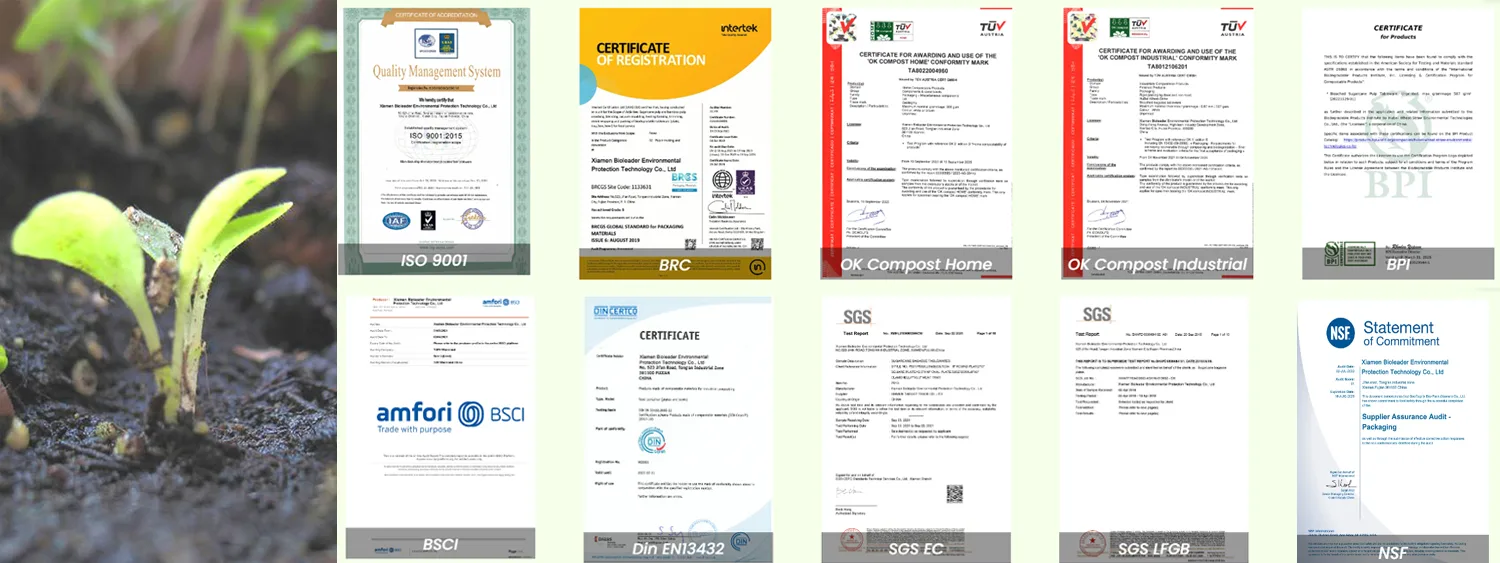
Buyers should start with Bioleader®’s Certificates & Test Reports and compostable tableware and packaging solutions, then confirm which documents apply to the exact product, formulation, manufacturing unit and destination market.
Material Selection Still Starts With the Food Application
| Product Family | Typical Application | Compliance Focus |
|---|---|---|
| Sugarcane bagasse packaging | Hot meals, takeaway containers, trays, bowls and plates | Product classification, fibre/barrier structure, food contact, PFAS evidence, lid configuration and applicable compostability scope. |
| PLA clear cups | Cold drinks, iced coffee, juice, smoothies and bubble tea | Cold-use specification, plastic/SUP treatment where applicable, food contact, industrial-compostability certificate and local composting route. |
| Paper food packaging | Hot drinks, soup, salad, noodles, takeaway meals and desserts | Paperboard plus PE/PLA/water-based/other barrier structure, food contact, recyclability or compostability evidence and local waste route. |
| Cornstarch-based tableware | Selected plates, trays, containers and utensils | Actual resin system, plastic classification, product-specific certification and supported disposal claim. |
Global Buyer Checklist for Compostable Packaging in 2026
- Define the destination market. Do not approve one artwork or certificate strategy for multiple countries before reviewing local requirements.
- Classify the product. Packaging, service packaging, food serviceware and non-packaging tableware can follow different rules.
- Identify the complete material structure. Include coatings, barriers, lids, labels, inks, adhesives and attached components.
- Check product legality first. A compostability certificate cannot override an applicable product ban or material restriction.
- Define the end-of-life claim. Industrial compostable, home compostable, recyclable and biodegradable are different claims.
- Select the correct standard and certification route. EN 13432, ASTM D6400/D6868/D8410, AS 4736, AS 5810 or another route may apply depending on product and market.
- Verify certificate scope. Match the certificate holder, SKU, formulation, thickness, colour, coating, print and components.
- Verify food-contact evidence separately. Match the product to intended food type, temperature and contact time.
- Review chemical restrictions. PFAS and other restricted-substance requirements may be independent from compostability certification.
- Identify the legal producer for EPR. The manufacturer, importer, brand owner or another operator may hold the obligation depending on the jurisdiction.
- Check registration and reporting. EPR, PRO membership, plastics registry, packaging reporting and annual data obligations are market-specific.
- Review environmental wording and logos. Use certification marks only with authorization and qualify claims where required.
- Check local infrastructure. Certification does not guarantee curbside or organics-program acceptance.
- Control product changes. A new coating, lid, supplier, production site, colour, print or formulation may affect certification and compliance evidence.
Procurement shortcut: If a supplier answers every market question with the same certificate PDF, the compliance review is not finished.
Which Bioleader® Guide Should You Read Next?
| If Your Main Question Is… | Use This Bioleader® Resource |
|---|---|
| What is the difference between European and North American industrial-compostability standards? | EN 13432 vs ASTM D6400 |
| Which global certification framework should a buyer request? | BPI vs EN 13432 vs AS 4736 vs AS 5810 |
| Can bagasse, PLA, CPLA or cornstarch products actually be sold in Europe? | EN 13432 Certification and EU Market Access |
| What should an EU foodservice buyer review under PPWR? | PPWR 2026 Foodservice Packaging Checklist |
| How should PPWR technical documentation and the EU Declaration of Conformity be organized? | PPWR Declaration of Conformity Guide |
| What special compostability rule currently affects Italy? | Italy 2026 Compostable Packaging Rule vs EU PPWR |
| How should environmental claims be verified? | EU Greenwashing Rules 2026 |
Final Thoughts: Global Compliance Is a Decision System, Not a Certificate Collection
The most important global packaging lesson in 2026 is that no single standard, certification logo or EPR registration creates universal market access.
EN 13432 can support an industrial-compostability claim in Europe, but it does not replace PPWR, SUP or national obligations. ASTM D6400-26 is a core North American technical standard, but state labeling and EPR requirements still differ. Canadian federal reporting is separate from provincial producer responsibility. Australia distinguishes commercial and home compostability. Singapore separates packaging reporting from its beverage-container EPR system.
For importers and foodservice buyers, the strongest approach is therefore to build a market-specific compliance matrix for each important SKU rather than asking whether the supplier has “global certification.”
Bioleader® can support that process with product specifications, available certificates and test reports, material information and samples for the selected product. The buyer, importer or legally responsible producer should then confirm the final market-specific regulatory, EPR and labeling obligations.
About Bioleader®
Xiamen Bioleader Environmental Protection Technology Co., Ltd. supplies foodservice packaging across sugarcane bagasse, PLA, paper-based and cornstarch-based product families for international B2B buyers.
For distributors, restaurant groups, foodservice brands and private-label buyers, Bioleader® can provide product specifications and available compliance documents for selected products so that sourcing decisions can be reviewed against the intended food application and destination market.
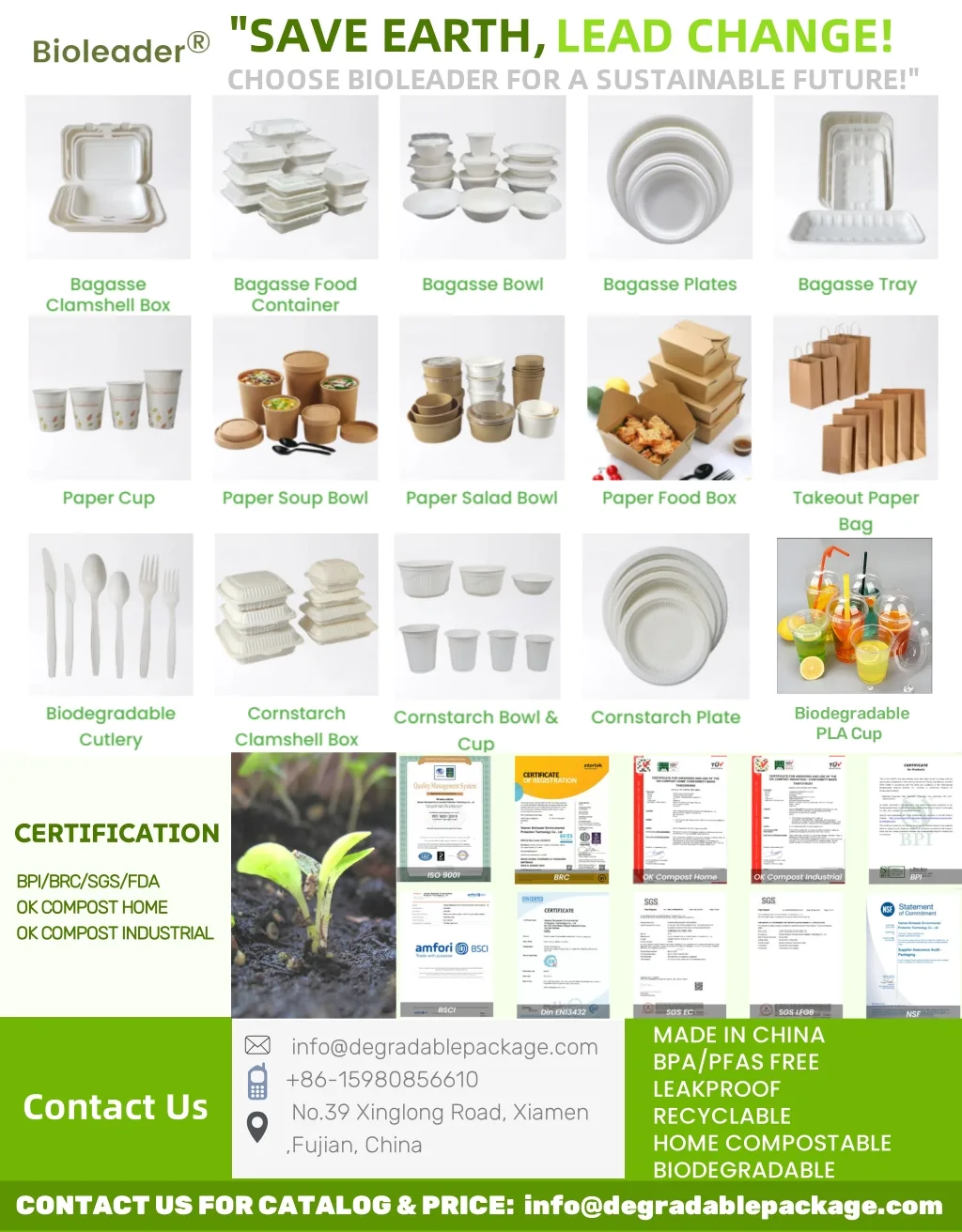
Contact Bioleader® for product-specific documentation, samples and sourcing review
Frequently Asked Questions
Is EN 13432 mandatory for all compostable packaging sold in Europe?
No. EN 13432 is an important European industrial-compostability standard, but it is not a universal market-access condition for every package or disposable foodservice product. Buyers must also consider PPWR, the Single-Use Plastics Directive, national rules, food-contact requirements and the exact environmental claim being made.
Is ASTM D6400-26 mandatory across the entire United States?
No single federal rule makes ASTM D6400-26 the universal compliance requirement for every compostable product in every U.S. state. ASTM D6400-26 is a major technical standard for eligible compostable plastics and products made from plastics, while state laws, certification programs, buyer specifications and labeling rules determine the additional requirements that apply.
Is BPI the same as ASTM D6400?
No. ASTM D6400 is a technical standard. BPI is a third-party certification organization and certification scheme that uses ASTM D6400 as a base standard for commercial compostability and may use other ASTM routes for eligible product structures. A laboratory report referencing ASTM D6400 does not automatically mean the finished item is BPI Certified.
Does compostable packaging still have EPR obligations?
It can. If a compostable package is covered by the destination market’s producer-responsibility law, the legally responsible producer may still need to register, report packaging data, join a Producer Responsibility Organization or pay applicable fees. Compostability does not automatically exempt packaging from EPR.
Is EPR the same in every EU country?
No. PPWR establishes an EU-wide packaging framework, but national producer-responsibility registration, reporting and operational requirements still require Member State review. Germany, France, Italy and other markets should not be treated as one identical registration system.
Does Canada have one federal packaging EPR system?
No. Canada’s Federal Plastics Registry is a federal reporting system and does not replace provincial EPR programs. As of September 2026, Phase 1 federal reporting continues for applicable 2024–2026 data while Federal Plastics Registry Phases 2 and 3 have been postponed. Provincial producer-responsibility obligations must be reviewed separately.
Can one compostability certificate cover Europe, the United States and Australia?
Not automatically. Different markets use different standards, certification schemes and claim rules. EN 13432, ASTM-based certification, AS 4736 and AS 5810 are not interchangeable global credentials. Buyers should verify the required standard, certification scheme, finished-product scope and disposal route for each destination market.
What documents should importers request from a compostable packaging supplier?
Importers should request the product specification, material and component information, applicable compostability certificate, food-contact evidence, PFAS-related documentation where relevant, technical data sheets, certificate-scope information and traceability records. The documents should be matched to the exact SKU, formulation, coating, lid, printing configuration and intended market.
Official and Technical References
- European Union — Regulation (EU) 2025/40 on Packaging and Packaging Waste
- European Commission — 2026 PPWR Guidance (C/2026/3084)
- BPI — 2026 ASTM D6400 Revision Update
- Environment and Climate Change Canada — Federal Plastics Registry
- CalRecycle — California SB 54 Packaging EPR
- Oregon DEQ — Producer Obligations under the Recycling Modernization Act
- Washington State Department of Ecology — Compostable Product Labeling Requirements
- Washington State Department of Ecology — Recycling Reform Act
- Australasian Bioplastics Association — AS 4736 and AS 5810 Certification
- Singapore NEA — Mandatory Packaging Reporting
- Singapore NEA — Beverage Container Return Scheme